All About Custom Patches: The Complete Australian Guide
Have you ever looked at a plain jacket, backpack, uniform, or cap and thought about whether you could add a little personality? The answer is yes. You can!
You can use it not only to showcase your brand and represent your team but also to celebrate an achievement and give your favourite clothes a fresh look.
However, you must remember that choosing the right patch involves more than picking a design. You also need to think about the material, size, backing, colours, and how you plan to use it. Some patches are made to last for years, while others are designed for easy application and removal.
Let’s explore the different types of custom patches, compare their backings, explore pricing, and share practical tips to help you make the right choice.
What Are Custom Patches?
We will first understand what custom patches actually are.
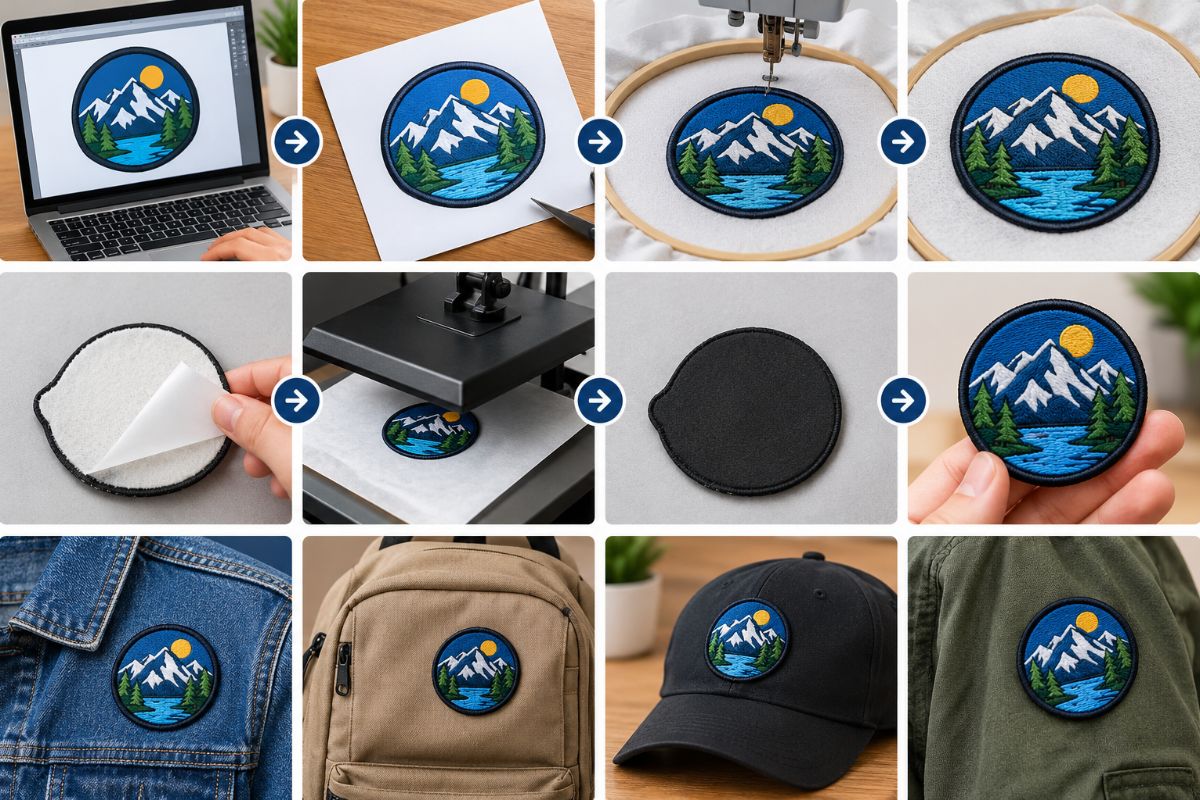
Custom patches are basically personalised fabric or rubber badges made to match your chosen design. They can display not only logos and names but also symbols, illustrations, text, and other artwork.
You can attach them to clothing, bags, hats, uniforms, and many other suitable items.
Unlike ready-made badges, personalised patches give you greater control over their appearance. You can choose their shape, size, colours, material, border, and backing to suit your needs.
And do you know what the best part is? You don’t need to run a large business or place a huge order to enjoy personalised patches. You can create something for a small group, a special event, or even your own wardrobe.
These are some of the most common custom patches selected in Australia:
- Airsoft patches
- Funny patches
- Business and corporate patches
- Fire department patches
- Flag patches
- Sports patches
- Emergency services patches
- Law enforcement patches
What Are the Different Types of Custom Patches?
But which type of custom patch should you opt for? Not sure? No worries! We’ll share the different types to help you make an informed choice.
You must also know that not all patches look or feel the same. The material you choose affects not only their appearance and durability but also their suitability for several uses.
Some of the most common options you can consider are.
- Embroidered patches
- Woven patches
- PVC patches
- Printed patches
- Leather patches
- Chenille patches
Let’s take a look at each one in detail.
Embroidered Patches
To begin with, these patches actually use stitched threads. This helps them create a raised design.
In addition to this, their textured finish makes them popular for jackets, uniforms, caps, and club badges. They work especially well for bold logos and simple lettering.
Woven Patches
Woven patches use thinner threads woven together to produce a smooth surface. They are a good choice not only for small text and fine lines but also for detailed designs that may be difficult to reproduce with thicker embroidery.
PVC Patches
PVC patches are basically made from flexible synthetic rubber-like material. This allows them to feature raised details and bold colours.
Besides that, these patches are suitable for outdoor gear, backpacks, tactical equipment, and designs that need a modern appearance.
Printed Patches
On top of that, printed patches can reproduce artwork directly onto a suitable surface. They are useful not only for photographs and colour gradients but also for intricate illustrations and designs with many small details.
Leather Patches
These patches offer a classic and premium appearance. They are commonly used on denim jackets, jeans, bags, and caps.
You can not only emboss and engrave but also print the design on these leather patches, depending on the material and finish.
Chenille Patches
Last but not least, chenille patches have a soft and fluffy texture. This texture creates a bold and eye-catching effect on these patches.
However, you may also come across name patches, flag patches, morale patches, bullion patches, and silicone badges. You must keep in mind that each of these patches serves a different purpose. This is why you need to think about the look and performance you need before making a decision.
How Can You Choose the Correct Backing for Custom Patches?
You might think that picking a visually appealing patch is the final step. But it’s not! You also have to choose the correct backing.
But why? Well, it determines how your patch attaches to an item and how easily you can remove or replace it.
Some backings focus on strength, others on convenience, and a few are designed for temporary use. You have to pick one that fits the way you will actually use your patch.
Sew-On Backing
A sew-on backing is a dependable choice when you want your patch to stay in place. You attach it to the fabric using a needle and thread or a sewing machine.
It is commonly used on workwear, denim jackets, uniforms, bags, and other items that are used regularly. It also works well for materials that may not be suitable for heat-activated adhesive.
However, there is an issue. Applying it takes more time and effort than some other options. But this is the key reason for its high durability.
Iron-On Backing
Iron-on backing, on the flip side, has a heat-activated adhesive on the back. When you apply the correct amount of heat and pressure, the adhesive bonds with a suitable fabric.
It is a convenient option if you want to attach a patch without sewing. However, you should always check the fabric’s care instructions and the patch manufacturer’s application guidance before using an iron.
Remember that delicate or heat-sensitive materials are not suitable for this backing. Moreover, additional stitching may help keep the patch secure for frequently washed clothing.
Velcro or Hook-and-Loop Backing
Do you want to change your patch without removing stitches? If so, then hook-and-loop backing can be your ideal choice.
One side attaches to the patch while the matching side is secured to the garment or equipment.
This option is especially useful for uniforms, tactical gear, backpacks, and equipment where patches may need to be changed regularly.
Its biggest advantage is reusability. However, the fastening surface can collect lint and debris over time. This may reduce its grip.
Quick Comparison of the Patch Backings
Let’s quickly compare the three patch backings. This will help you choose the best one based on your needs.
| Backing Type | Key Advantage | Best Suited for | Limitation |
| Sew-on | Secure attachment | Uniforms, jackets, workwear | Requires stitching |
| Iron-on | Easy application | Heat-tolerant fabric garments | Needs controlled heat |
| Velcro | Easy to remove and replace | Tactical gear, changeable uniforms | Fastening can collect debris |
How Much Do Custom Patches Cost in Australia?
Let’s be real. You can’t decide on buying something until you have an idea of the estimated cost, right?
There is no single price for every patch. The final cost depends on what you want to create and how many pieces you need. However, the cost of custom patches Australia often ranges from AU$0.25 to AU$5.5+ per patch. However, this is just an estimated cost, and the price may vary based on several considerations.
Here are the main elements that influence your budget:
Material
Embroidered, woven, printed, PVC, and leather patches can have different production costs.
Size
Larger patches generally require more material and may take longer to produce.
Design Complexity
Apart from that, the price can be influenced not only by detailed artwork and numerous colours but also by special finishes and intricate lettering.
Backing
Your preferred attachment method may change the final quote.
Order Quantity
Larger orders often have volume discounts, while small orders may have different per-piece costs.
Delivery Speed
Express production or shipping options may cost extra.
If you are comparing quotes from different suppliers, you must ask what is included in each. You should check whether artwork preparation, revisions, delivery, and any setup charges are covered.
What Factors Do You Need to Consider When Buying Custom Patches?
You must consider a few factors before buying custom patches in Australia.
Make sure that you choose the right material and that every detail you choose is correct. You must also work with a reliable expert.
Choose the Right Material for Your Needs
You first have to decide where and how you will use your patches.
You can choose between embroidered, woven, PVC, printed, leather, or chenille patches based on your needs.
Make Sure Everything’s Correct
Besides that, you need to ensure that everything is correct. You may not know this, but a beautiful design can lose its impact if the patch is too small or difficult to read.
You can consider the available space on your jacket, cap, bag, or uniform before finalising the dimensions.
In addition to this, you should keep text readable and avoid squeezing too many details into a small area.
You must also ask for a digital proof before production. This will allow you to carefully check not only the spelling and colours but also the dimensions and placement. It is much easier to request a correction before manufacturing begins.
Work with a Reliable Custom Patch Maker
You should choose a reliable custom patch maker for your order. You must look not only for clear communication and suitable materials but also for transparent pricing and a production process that lets you review your artwork.
You should also confirm the production and delivery timelines. And don’t forget to ask about the durability and washing instructions for the custom patches.
Most Asked Questions
What is a custom patch?
A custom patch is basically a personalised piece of fabric, vinyl, leather, or flexible rubber. It is designed not only with a specific logo and name but also an image and text, which is then attached to clothing, uniforms, hats, or bags.
What are the most common types of custom patches?
The most common types of custom patches are embroidered, woven, PVC, printed, leather, and chenille patches. You have to choose the right one based on your needs.
What is the cost of custom patches in Australia?
Custom patches generally cost between AU$0.25 and AU$5.5+ per patch in Australia. However, the price may vary depending on several factors, including not only material and size but also design complexity, backing, order quantity, and delivery speed.
To Conclude
Custom patches are a simple way to add personality and improve brand recognition. There are various types of custom patches, including embroidered, woven, PVC, printed, leather, and chenille patches.
You also have to select the right patch backing. You can choose from sew-on, iron-on, or Velcro backing.
On top of that, custom patches in Australia cost between AU$0.25 and AU$5.5+ per patch.
However, you need to consider a few factors. These factors include not only choosing the right material and making sure everything’s correct, but also working with a reliable custom patch maker.

As the author of australiapatches.com.au, I provide useful information about patches, printed, embroidered, and PVC patches, as well as market trends and practical uses. With a hands-on approach and an Aussie perspective, I help readers choose quality solutions, understand materials, and navigate suppliers with confidence, clarity, and honest advice. Tailored guidance for Australian companies and artists.