
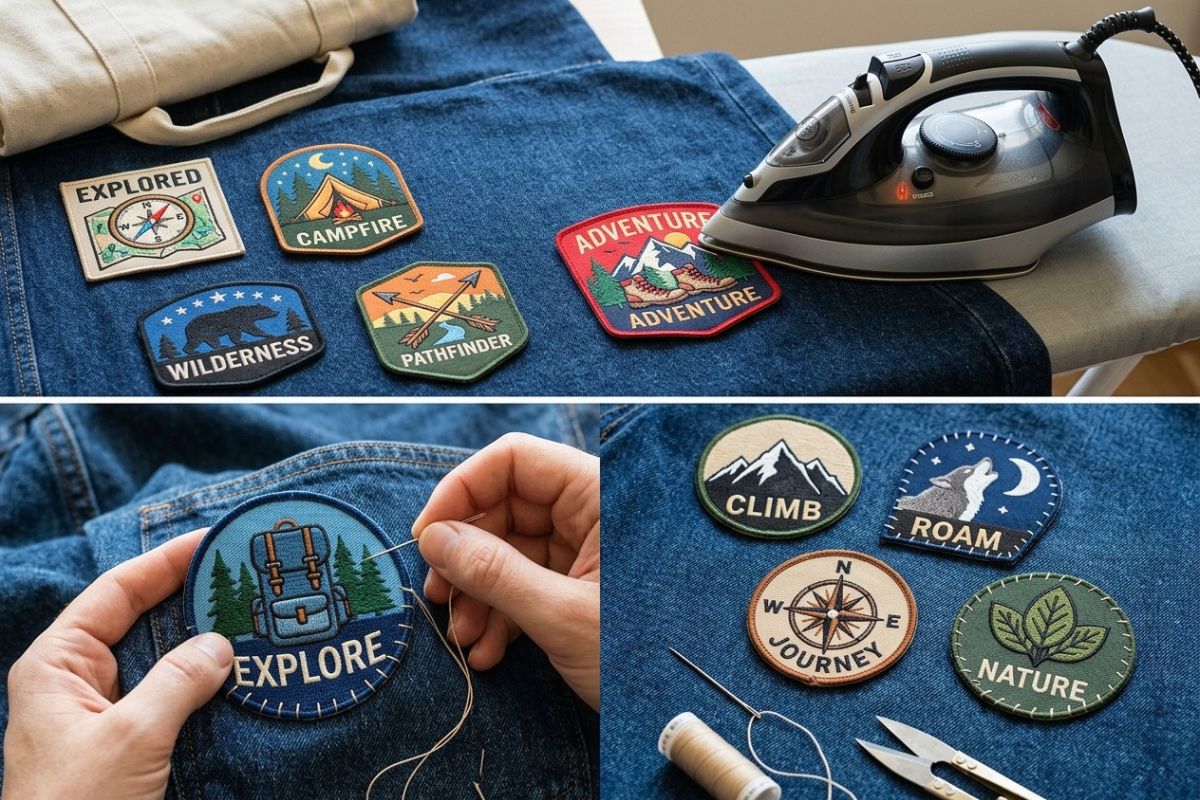
Iron On Patches vs Sew On Patches: Which Is the Best Option?
Patches have led trends for the past few years. In such an instance, choosing the right one among so many choices is no less than challenging. The best patch, iron-on or sew-on, depends on how you will use it, the fabric it will cover, and how long it needs to last. Iron-on patches are quick to apply, and sew-on patches can be more reliable for items that are washed often, rubbed or used heavily.
Both can be used to make good designs, but the wrong backing will result in peeling, loose edges or damage to the fabric. Once you know how they differ, you will be able to choose an insignia that will look good and hold on to the fabric.
How Do Iron-On and Sew-On Patches Work?
If you want to use patches for your next look or for any purpose, first understand how these two differ. The difference between the two patches is mainly the way they are glued onto the fabric. The iron-on one is stuck on using a heat-activated adhesive, and a sew-on patch is a kind of patch that is stitched around the edges or through the back of the patch.
Iron-On Patches
When you apply it with an iron or heat press, the patch adheres to the appropriate fabric through a layer of hot glue.
Sew-On Patches
Custom sew on patches are held in place by means of needles and thread, which attach the piece in a way that is not dependent on adhesive.
The decision here can’t be taken simply based on convenience. The outcome will depend on the type of fabric, size of the patch, where the patch is worn, and how much wear the patch is expected to endure. A patch for a decorative tote bag is not going to require the same treatment as one on a uniform that gets washed regularly.
What Are the Primary Benefits of Using Iron-On Patches?
Iron-on patches have become very popular as they allow for easy modification. No sewing knowledge is required, and many designs can be attached in minutes.
Some Major Benefits!
Quick Application. Heat makes the adhesive go on without having to stitch each spot.
Clean Finish. The patch can be attached to the garment without visible stitching around the edge of the patch.
Customisable. They can be attached to jackets, denim bags, casual shirts and many more appropriate items.
Consistency of placement. A patch may be placed in front of heat to provide a neat layout.
Imagine a young individual putting a few small designs on their denim jacket. Instead of sewing each edge, iron-on patches make it simple to arrange the artwork and glue each piece in place.
In Which Circumstances Are Sew-On Patches a Better Choice?
An item that is likely to be used over and over is best suited for a sew-on patch. Unlike glued patches, the stitching secures the patch to the garment without relying on the glue to remain fixed to the garment.
Where This Patch Type is Actually Helpful?
- Work Uniforms
Clothing that is washed often and is used for everyday work activity.
- Backpacks
Areas that are vulnerable to rubbing, pulling and friction.
- Heavy Jackets
Thick materials that can be hard to bond evenly with heat.
- Team Attire
Uniforms that must be worn for an entire season.
A hiking club that wishes to tag on badges to backpacks should think about a sew-on option. The bags can rub against rough surfaces, be loaded with heavy items and experience changes in temperature and weather conditions.
The only disadvantage is the time element. Hand-stitching takes patience, and machine-stitching takes appropriate equipment. The look of the thread colour and the spacing of stitches also impact the end result.
How Do Various Types of Patches Influence Your Decision?
The material and construction of the patch are important, as well as its backing. Different designs suit various uses. If you are ordering custom iron on patches, ask if the back is suitable for your garment or not. Do not assume that all patches will work on all fabrics.
Embroidered Patches
A traditional look is achieved by raised threads. They fit jackets, bags, team and branded clothes. Depending on the design, both types of attachment, like iron-on and sew-on, might be possible.
Woven Patches
Small lettering and logos are easier to display on a flatter surface, which is achieved by the use of fine threads. Woven patches are suitable for use on uniforms and promotional clothing.
PVC Patches
PVC patches have designs that are moulded, providing a rubber-like surface. They are ideal for outdoor equipment and some bags, but are only attachable to the product as specified. There are cases in which standard methods of iron-on will not work with PVC patches.
Chenille Patches
A soft, velvety texture of patches with chenille intricacies lends varsity jackets and sportswear a strong look. They have a thick, raised look. It is advised for buyers to msut verify the recommended mounting method before ordering.
What Else Should You Take into Account When Ordering Patches?
Before placing an order, both the buyer and the patch manufacturer should communicate and clarify a few questions. At this point, both need to answer in a way that clears up confusion so the final outcome is aligned.
What type of fabric will you use?
Test to see if it can withstand the adhesive backing heat.
How many times per day does the item need to be laundered?
The clothes worn on a regular basis usually benefit from sew-on patches.
Will the design be on the curved surface?
Hats and shaped accessories might require some attention in placement and application.
Who will be responsible for the installation of the patches?
Iron-on designs might be more successful if applied in the home setting, and bulk orders may be more feasible to complete professionally.
- A small business ordering sew-on patches for staff uniforms will want to consider stitching if the uniforms will be washed often.
- A club that creates occasional event swag might want to choose a fabric that is more suitable for quick iron-on application.
Is It Possible to Combine Both Attachment Methods?
If one is wondering about combining both iron-on and sew-on patches, the answer is positive. For complementary clothing, a patch may be ironed on and stitched around the edges for reinforcement. This is a combination of adhesive application and physical attachment.
The method can be helpful if a patch requires additional security and the need is to place it rapidly. It is not appropriate for all materials, though, so refer to the garment or patch instructions first.
If a helmet or another type of headwear, like custom embroidered hats, is needed, they might present a different challenge. The reason is that the curved panels, stiff fronts and thick seams can complicate the home embroidery process. They may look neater if professionally applied or stitched.
FAQs
Can iron-on patches be removed without damaging the clothing?
Sometimes, but the removal often depends on the adhesive and the fabric. Heat can melt the glue but may leave residue. Test a hidden area first and then remove as directed by the patch manufacturer.
Can the fabric be washed right after attaching the patch?
It is best to wait for the time specified by the manufacturer. This will allow the adhesive to settle correctly. However, patches do not need time to cure when sewn on.
Can iron-on patches be used on fabrics that stretch?
They may not adhere consistently to materials with a high elastic nature, as they can be separated by the stretching of the material. Sewing is usually a more suitable method when a natural movement of the fabric is possible.
Does a leather jacket have a patch sewn to it?
Sewing could do the job, but leather gets holes when it is sewn through. For valuable garments, professional advice is helpful, and standard iron-on adhesive may not work as well on leather.
Is there a need for patches to be the same colour as the garment?
No, contrasting colours can add some sharpness to a design, whereas matching colours will provide a subtle finish. Consider the thread, border, garment shade, and how it will look when worn.
Make Your Choice Realistically
Which is better in the debate between iron-on and sew-on patches is determined by what the patch has to endure. Iron-on patches are quick to apply and easy to personalise, while sew-on patches will help guarantee the patch stays in place if it is going to be sewn into a garment that will be worn often and washed frequently. The type and size of patch and fabric placement also have an impact. Think ahead before ordering and determine how it will be used and maintained. The selection of design and backing will help to make sure that your patch is pleasing, secure and appropriate for its function.

As the author of australiapatches.com.au, I provide useful information about patches, printed, embroidered, and PVC patches, as well as market trends and practical uses. With a hands-on approach and an Aussie perspective, I help readers choose quality solutions, understand materials, and navigate suppliers with confidence, clarity, and honest advice. Tailored guidance for Australian companies and artists.