
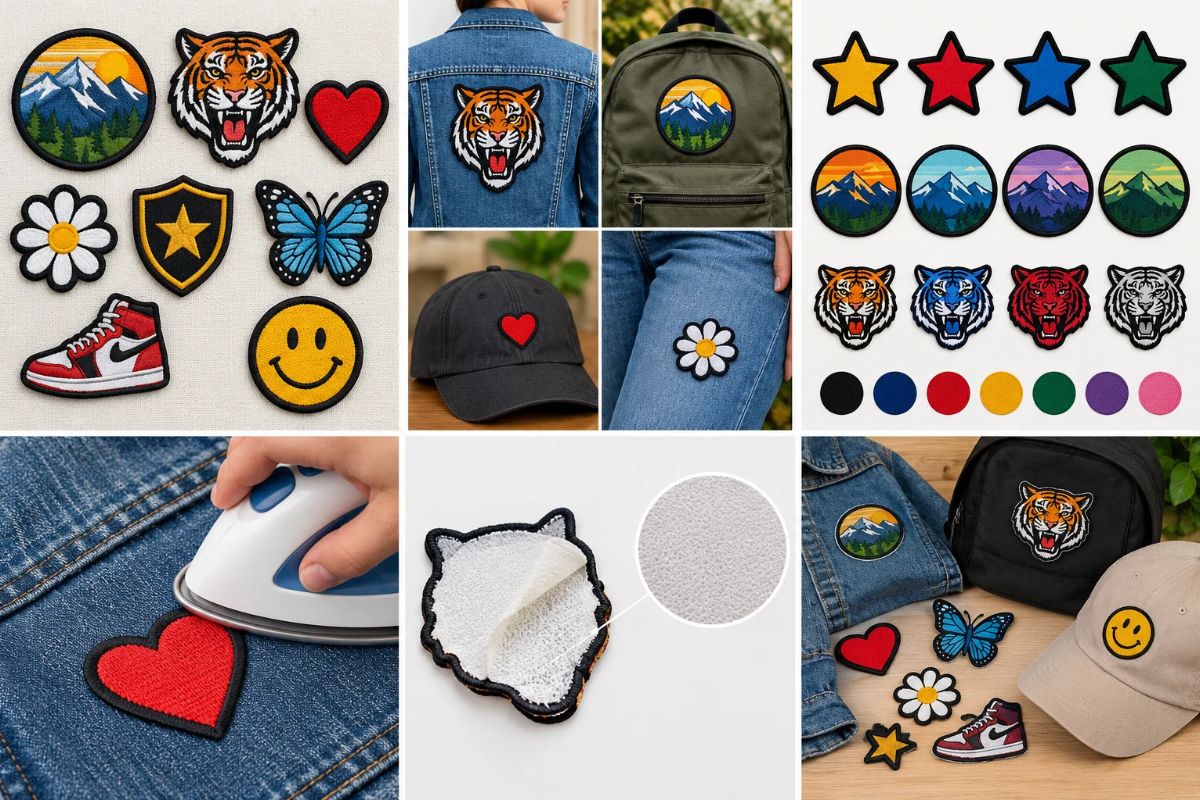
Custom Iron On Patches: Types, Uses, Custom Options and Tips for Buying
No doubt, we all love custom patches. However, you must also agree that sewing a patch can be pretty time-consuming and requires top-notch skills. Does that mean we should stop using custom patches? Not at all!
Instead, you can simply change the backing. Custom iron on patches are becoming a popular choice. They don’t require any sewing skills. And you can attach them in just a few seconds. How cool is that?
But what if you know nothing about these patches? How will you buy them? No worries!
We will guide you through everything you need to know about custom iron on patches. This includes types, uses, custom options, and buying tips.
So, are you ready? Let’s dive in!
What Custom Iron On Patches Actually Are
Let’s begin our guide by understanding what custom iron on patches actually are.
Custom iron on patches are actually tailor-made fabric badges with a heat-activated adhesive backing. This backing allows them to bond directly to textiles with an iron or heat press.
And the best part about these patches is that you don’t have to waste your time on sewing.
You can attach these patches to
- Jeans
- Phone Cases
- Jerseys
- Jackets
- Shoes / Sneakers
- Backpacks
- Shirts
- Hats / Caps
One of the key reasons for the popularity of these patches is their flexibility. You can attach the patch to any heat-tolerant clothing in mere seconds.
Isn’t that amazing?
How Do These Patches Even Work?
Custom iron on patches work by using a heat-activated adhesive backing, like a solid glue or fusible film, that melts when exposed to high heat and pressure.
This allows the adhesive to bond directly into the fibres of a garment.
This is how custom iron on patches really work.
Preparation
You first have to do the preparation. It’s actually pretty simple. You just have to make sure the garment is not only clean and dry but also free of dust, lint, or fabric softener residue that can interfere with the glue.
You should also preheat a household iron to a medium-high or cotton setting. Remember to turn off the steam feature. This is because the moisture can ruin the adhesive.
Placement
Once the preparation is done, you have to place the patch. The adhesive side of the patch must be down on the fabric and covered with a thin protective press cloth.
This will help you protect the embroidery and prevent glue from sticking to the iron
Pressing
After that, you have to apply firm and direct pressure with the iron for 20 to 60 seconds without sliding it around.
Then flip the garment inside out, and apply heat directly to the back of the patch for another 20 to 30 seconds to seal the bond from both sides.
Cooling
Finally, you have to leave the garment to cool completely undisturbed. This will solidify the adhesive and help it grip the fabric fibres tightly as it cools.
What Are the Various Types of Custom Iron On Patches?
Besides that, there are various types of custom iron on patches. To pick one, you need to be aware of the different types.
Some offer a classic embroidered look, while others feature bold colours, smooth finishes, or unique textures.
The most common types of iron on patches are
- Embroidered
- PVC
- Woven
- Bullion
- Chenille
- Printed
- Leather
Let’s explore each type and see where it works best.
Embroidered Iron On Patches
Embroidered iron on patches are a classic choice. These patches are one of the most popular Australia patches.
They basically display colourful threads stitched onto a fabric base to create raised designs.
Apart from that, these patches work pretty well not only for logos and names but also for team badges and decorative artwork. Their textured appearance makes them easy to notice on jackets, uniforms, backpacks, and caps.
PVC Iron On Patches
On the flip side, PVC patches are made from a flexible rubber-like material. They are known for their bold colours and raised 3D designs.
These patches are durable and resist moisture better than many fabric options. Plus, they are a great choice not only for outdoor clothing and tactical gear but also for sports accessories.
However, you must remember that the heat application method must be suitable for the patch’s backing and the garment.
Woven Iron On Patches
Woven patches basically use fine threads that are woven together to create detailed designs. Unlike embroidered patches, they have a flatter surface.
This makes them ideal for small text, intricate logos, and artwork with fine lines. They can be an ideal option when you want a neat and professional finish.
Bullion Iron On Patches
Bullion patches have a rich and decorative appearance. They often use metallic threads, gold or silver wire, and detailed stitching.
You may see them not only on military-style insignia and ceremonial uniforms but also on formal emblems. However, these patches often cost more than others due to their detailed craftsmanship.
Chenille Iron On Patches
In addition to this, chenille patches have a soft, fuzzy texture that gives them a bold and raised look. They are commonly used for varsity jackets, school letters, sports team logos, and club designs.
Their thick texture is actually what makes them perfect for large letters and simple shapes.
Printed Iron On Patches
Printed patches basically feature designs that are printed directly onto fabric. They can be really good not only for colourful artwork and photographs but also for gradients and complex patterns that can’t be created with stitching.
Besides that, they also allow excellent design flexibility. This makes them quite suitable for promotional items and creative projects.
Leather Iron On Patches
Last but not least, leather patches offer a stylish and premium appearance. They can feature not only embossed and engraved designs but also printed designs.
Moreover, these patches are often used on denim jackets, jeans, bags, and hats. You must keep in mind that genuine leather and faux leather provide different looks and care requirements.
This is why you should always check whether its backing is suitable for heat and the garment’s fabric before applying one.
Comparison Table for Different Types of Iron On Patches
This table will help you understand the differences between the types of custom iron on patches:
| Patch Type | Look and Texture | Best Uses | Durability and Washability |
| Embroidered | Raised, textured thread with classic depth | Uniforms, jackets, caps, and traditional logos | Moderate-high durability but low-moderate washability |
| PVC (Rubber) | Sculpted 3D or 2D tactile plastic/rubber | Outdoor gear, tactical backpacks, and waterproof items | High durability and washability |
| Woven | Flat, smooth surface with fine detail and small text | Detailed logos, thin fonts, and sportswear/jackets | Moderate-high durability and washability |
| Bullion | Distinctive raised, three-dimensional look and a firm, metallic-coiled texture | Ceremonial uniforms, royal badges, and luxury blazers | High durability but low washability |
| Chenille | Fuzzy, soft, thick yarn pile (letterman style) | Varsity jackets, oversized sweater letters, and fashion pieces | Low-moderate durability and washability |
| Printed/Sublimated | Smooth, full-colour photo-quality gradients | Complex artwork, photographic designs, and multi-colour logos | Moderate-high durability but low washability |
| Leather | Smooth or embossed natural/faux leather | Premium hats, beanies, denim jackets, and minimalist branding | High durability but low-moderate washability |
How Can You Use Custom Iron On Patches in Different Ways?
Now that you know about the different types of iron on patches, let’s explore how you can use them.
Here are three creative ways to use these patches.
Give Your Everyday Clothes a Fresh Look
To begin with, custom iron on patches can help you change their appearance without spending money on new clothes.
You can add colourful patches to denim jackets, decorate plain shirts with small designs, or give your jeans a unique look.
In addition to this, you can even use patches to cover small stains or minor fabric marks. Just make sure the patch is large enough to cover the area properly.
It’s an easy way to express your personality through clothing!
Show Team Spirit and Brand Identity
Custom patches are also a great way to bring people together. Sports teams, schools, and clubs can use them to display not only their logos and names but also their mascots.
Businesses can also use these patches to create branded uniforms for their employees. They help make clothing look more professional while keeping the brand’s identity visible.
Whether you’re part of a sports club or running a small business, these patches can really help you stand out.
Personalise Bags, Caps, and Accessories
Who says patches are only for clothes? You can use custom iron on patches to decorate not only your backpacks and tote bags but also your caps and other fabric accessories.
However, you must remember that not every material is suitable for heat application. This is why you should always check the manufacturer’s instructions before applying a patch to an accessory.
If the material cannot handle heat, you can consider a sew-on patch or another suitable attachment method.
What Are the Best Customisation Options?
On top of that, you can design these iron on patches according to your preferences. You don’t have to settle for something that looks ordinary when you can create a patch that reflects your ideas.
Here are some customisation options that you can consider.
Shape and Size
First of all, you can select different shapes and sizes for your custom iron on patches.
Round, square, rectangular, and shield-shaped patches are popular options.
However, you must keep in mind that small patches work well for shirt pockets and caps. Larger designs, on the flip side, are better for jackets and backpacks.
Colours
How can we forget about colours? These are one of the most crucial factors to make your patches visually appealing.
You need to understand that an aesthetically pleasing design or logo is not enough for your patch. You also have to choose the right colours.
Remember that colours can completely change the appearance of a patch. If you want your patch to stand out, you can use bright colours. Besides that, neutral shades can help you create a more subtle and professional look.
Backing Types
The backing is one of the most important things to consider when ordering custom patches. And there is not only one backing option. You can choose from iron on, sew on, Velcro, and others.
Apart from iron on patches, custom Velcro patches are also becoming quite popular. This is because these patches are a practical choice when you want to remove or replace a patch without damaging the garment.
However, if you want something more durable and permanent, sew on backing is your answer.
Since you’re looking for iron on patches, you should choose a heat-activated adhesive backing designed for your chosen patch material.
How Can You Buy Top-Notch Custom Iron On Patches? Practical Tips
You must also agree that buying custom iron on patches seems quite simple. But choosing the wrong material or backing can lead to disappointment. You don’t want to receive a beautiful patch only to discover that it doesn’t suit your garment!
Here are three effective tips to help you make the right choice.
Check the Quality of the Material
Never choose a patch based on its appearance alone. The material also matters.
You must look not only for neat stitching and clear artwork but also clean edges and a well-finished backing.
Besides that, make sure that the material is heat-tolerant.
If possible, you should request a sample before placing a large order. This way, you can check the quality before ordering.
Compare Prices Without Ignoring Quality
Yes, we agree that price is important, especially when you’re buying patches in bulk. However, you must understand that the cheapest option isn’t always the best deal.
This is why you need to compare suppliers based not only on material quality and design options but also on minimum order quantities and production time.
Also, you have to ask whether the quoted price includes setup fees, shipping, and any additional customisation charges.
Review the Design and Ask About Aftercare
On top of that, you must carefully review not only the artwork and spelling but also colours, dimensions, and overall layout. And yes, you have to do this before approving your order.
Remember that even a tiny mistake can affect the final result.
You should also ask the supplier how to apply and care for the patches. Find out whether the garment can be machine-washed, what temperature is recommended, and whether the patch needs extra stitching for a stronger hold.
Most Asked Questions
How does an iron on patch differ from a sew on patch?
An iron on patch basically uses a heat-activated adhesive backing to stick to fabric. A sew on patch, on the other hand, has a plain fabric backing and requires stitching.
Can you put custom iron on patches on any fabric?
No. You cannot put iron on patches on every fabric. This is actually because the heat-activated adhesive requires specific temperature thresholds and surface textures to bond properly with the fabric.
How can you attach iron on patches to fabric?
To attach an iron-on patch to fabric, you first have to preheat your iron to the cotton or medium-high setting with the steam turned off. Then place the patch glue-side down on the fabric and press firmly for 30 to 60 seconds. Turn the fabric inside out and press the iron directly against the back of the patch area for about 30 seconds. Let the fabric cool for at least 1 to 2 minutes.
All in All!
To sum it all up, custom iron on patches are a great alternative if you lack sewing skills. The main reason why people love these patches is their easy application.
The different types of iron on patches include embroidered, PVC, woven, bullion, chenille, printed, and leather iron on patches.
Besides that, you can use these patches in several ways to give your clothes a new look and build team identity. It also allows you to personalise not only bags and caps but also other accessories.
However, to buy top-tier custom iron on patches, you must check material quality and compare prices without sacrificing quality. You must also review the design and ask about aftercare.

As the author of australiapatches.com.au, I provide useful information about patches, printed, embroidered, and PVC patches, as well as market trends and practical uses. With a hands-on approach and an Aussie perspective, I help readers choose quality solutions, understand materials, and navigate suppliers with confidence, clarity, and honest advice. Tailored guidance for Australian companies and artists.